
Why Do I Feel Lost? The Hidden Reason So Many People No Longer Recognize Themselves
There comes a moment in many lives when an unsettling question begins to arise.
Not loudly.
Not dramatically.
Quietly.
Perhaps after years of achievement.
Perhaps after raising a family.
Perhaps following retirement, divorce, burnout, or simply reaching a stage of life that once seemed so important.
The question appears unexpectedly:
Why do I feel lost?
You may be functioning well on the outside.
You may have responsibilities, relationships, and accomplishments.
Yet inwardly, something feels absent.
Something feels unfamiliar.
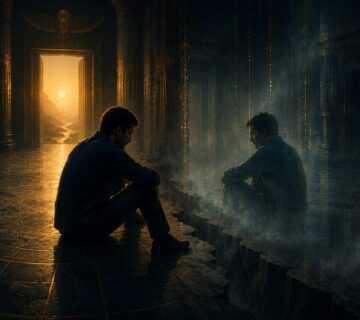
You may even have the strange sensation that you no longer recognize yourself.
If this describes your experience, you are far from alone.
In fact, this quiet crisis is becoming increasingly common.
And contrary to what many people assume, feeling lost does not necessarily mean something is wrong with you.
It may mean something important is trying to awaken.
Why Feeling Lost Is More Common Than You Think
Many people believe they are supposed to possess absolute certainty about life.
They imagine that adulthood should bring permanent clarity, confidence, and purpose.
Yet real life rarely unfolds in such a straightforward manner.
Executives experience it.
Entrepreneurs experience it.
Professionals experience it.
Parents experience it.
Successful people experience it.
People approaching midlife often experience it.
Even those who appear outwardly successful frequently discover that external achievement does not automatically answer the deeper questions of existence.
Questions such as:
- Who am I really?
- Why do I feel disconnected from myself?
- Why does success no longer satisfy me?
- What happened to the person I once thought I would become?
- Is there more to life than this?
These questions are not signs of failure.
They are signs of humanity.
Common Modern Explanations
Modern psychology offers several explanations for feeling lost.
Stress.
Burnout.
Depression.
Major life transitions.
Identity crisis.
Loss of meaning.
Unresolved emotional wounds.
These explanations contain genuine wisdom and should never be dismissed.
Our emotional, psychological, and physical health matter deeply.
Yet many people discover that even after addressing these areas, something still feels incomplete.
They have information.
But they lack orientation.
They understand parts of themselves.
But they do not possess a complete picture.
It is rather like having individual pieces of a puzzle without ever seeing the image they were meant to form.
Perhaps You Have Not Lost Yourself
What if the experience is not actually one of losing yourself?
What if it is one of forgetting yourself?
There is an important difference.
To lose something suggests that it has disappeared.
To forget something suggests that it still exists, waiting to be remembered.
This possibility changes everything.
Perhaps beneath the stress, responsibilities, expectations, and identities accumulated over many years, something essential remains untouched.
Perhaps the deepest part of you has never been destroyed.
Perhaps it has simply become obscured.
Many people intuitively sense this.
They know there must be more.
They know there is something within them that has been neglected.
Something authentic.
Something whole.
Something real.
Why Modern Life Makes It Easy to Forget Ourselves
Modern life rewards productivity.
Achievement.
Efficiency.
External success.
Constant stimulation.
Yet very little attention is given to understanding the architecture of the human being itself.
From childhood onward, we are taught how to earn a living.
How to perform.
How to succeed.
How to meet expectations.
But rarely are we taught how to understand ourselves.
Consequently, many people become highly accomplished while remaining inwardly disconnected.
They build careers.
Yet lose contact with meaning.
They fulfill responsibilities.
Yet forget who they are beneath those responsibilities.
Eventually, a quiet dissatisfaction begins to emerge.
Not because they have failed.
But because external success alone cannot answer inner questions.
The Hidden Invitation
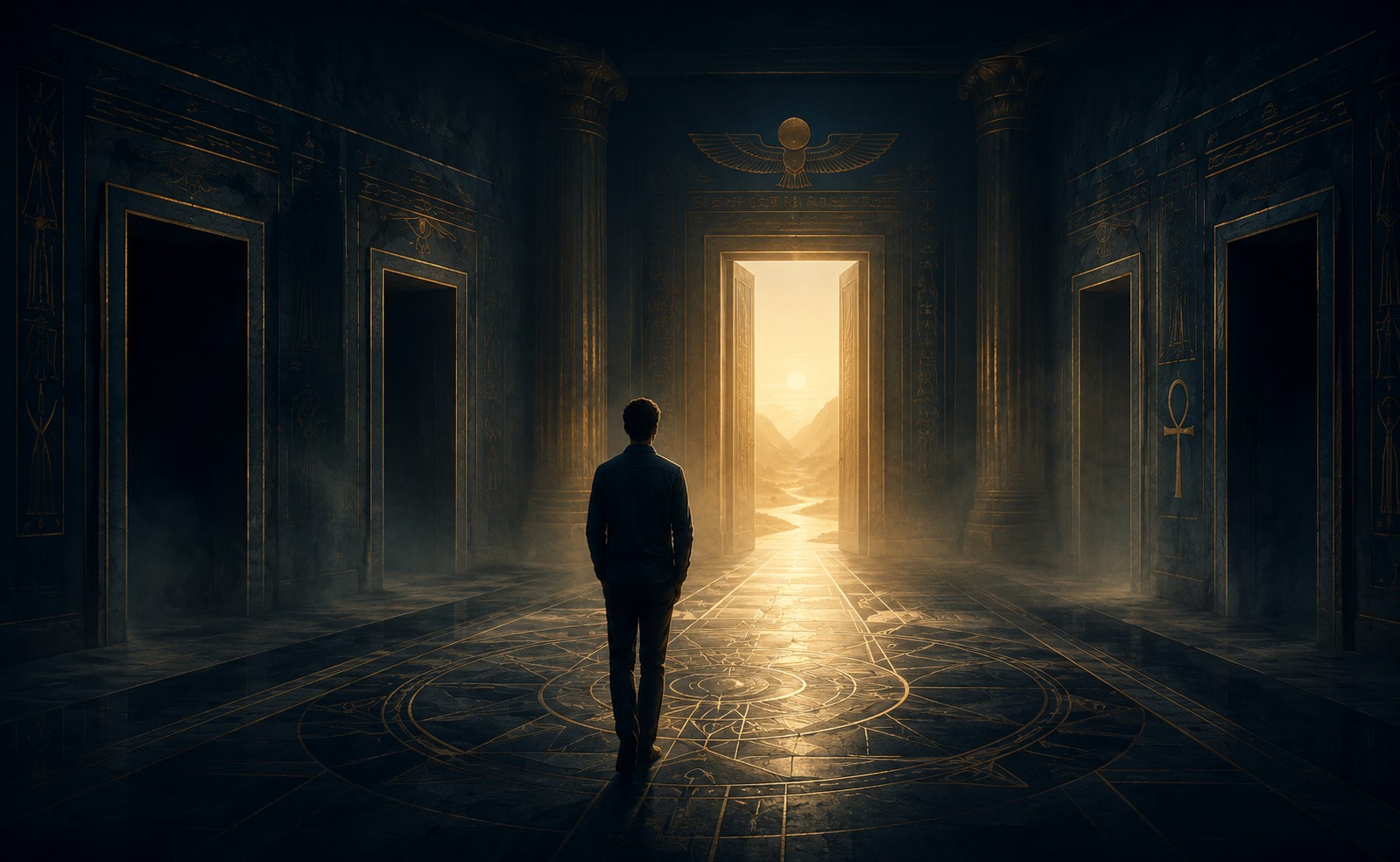
Feeling lost may actually contain a hidden invitation.
Not an invitation to become someone else.
But an invitation to remember.
To pause.
To examine the life you have built.
To ask deeper questions.
To discover what truly matters.
To return to yourself.
Many people who later describe periods of great transformation speak of a season in which everything seemed uncertain.
At the time, they interpreted it as a crisis.
Years later, they understood it as a beginning.
What appeared to be an ending was actually an initiation into greater self-understanding.
How Ancient Egypt Approached the Question
Thousands of years ago, the wisdom traditions of Ancient Egypt approached human beings in a remarkable way.
They did not view people merely as personalities.
Nor did they reduce human experience to isolated emotional states.
Instead, they understood the human being as possessing multiple dimensions that required harmony and integration.
Identity.
Shadow.
Heart.
Vitality.
Purpose.
Embodiment.
Illumination.
Their aim was not self-improvement in the modern sense.
It was remembrance.
The restoration of inner alignment.
The awakening of what might be called the highest possibility within the human being.
Not through escaping life.
But through understanding it more deeply.
Modern people possess immense amounts of information.
Ancient Egypt possessed something equally important.
A map.
Ancient Egypt’s Complete Map of the Human Being™
One of the greatest challenges of modern life is fragmentation.
People understand pieces of themselves.
But rarely the whole.
Ancient Egyptian wisdom offered a remarkably integrated understanding of human nature.
Not merely a philosophy.
Not a religion.
Not a form of escapism.
But a practical framework for self-understanding and inner harmony.
This understanding forms the foundation of what we call:
Ancient Egypt’s Complete Map of the Human Being™
A framework designed to help modern individuals understand themselves more deeply and recover the forgotten dimensions of their own being.
Because perhaps the greatest problem facing many people today is not that they have lost themselves.
Perhaps they have simply forgotten.
How to Begin Finding Yourself Again
You do not need to have everything figured out.
You do not need all the answers.
You do not need to reinvent your life overnight.
Begin with gentleness.
Begin with honesty.
Begin with curiosity.
Ask yourself:
- What parts of myself have I neglected?
- When did I begin living primarily for expectations rather than meaning?
- What truly matters to me?
- What brings me alive?
- Who am I beneath my roles and responsibilities?
These questions are not signs that you are falling apart.
They may be signs that something deeper is seeking expression.
And perhaps this journey is not about becoming someone new.
Perhaps it is about remembering who you have always been.
The Journey Back to the Royal Self
If these reflections resonate deeply, you may appreciate our complimentary guide:
The Forgotten Self™
Rediscovering Who You Are Beneath the Roles, Expectations, and Conditioning of Life
Inside this free guide, you will explore:
- Why so many people feel lost in the modern world.
- The difference between losing yourself and forgetting yourself.
- Ancient Egypt’s understanding of human nature.
- The beginning of the journey toward inner integration.
- A deeper understanding of what we call the Royal Self.
Download Your Complimentary Copy
Begin your journey of remembrance here:
https://pharaohwithin.com/the-forgotten-self/
Because perhaps the person you seek has never truly been lost.
Perhaps they have simply been waiting to be remembered.